
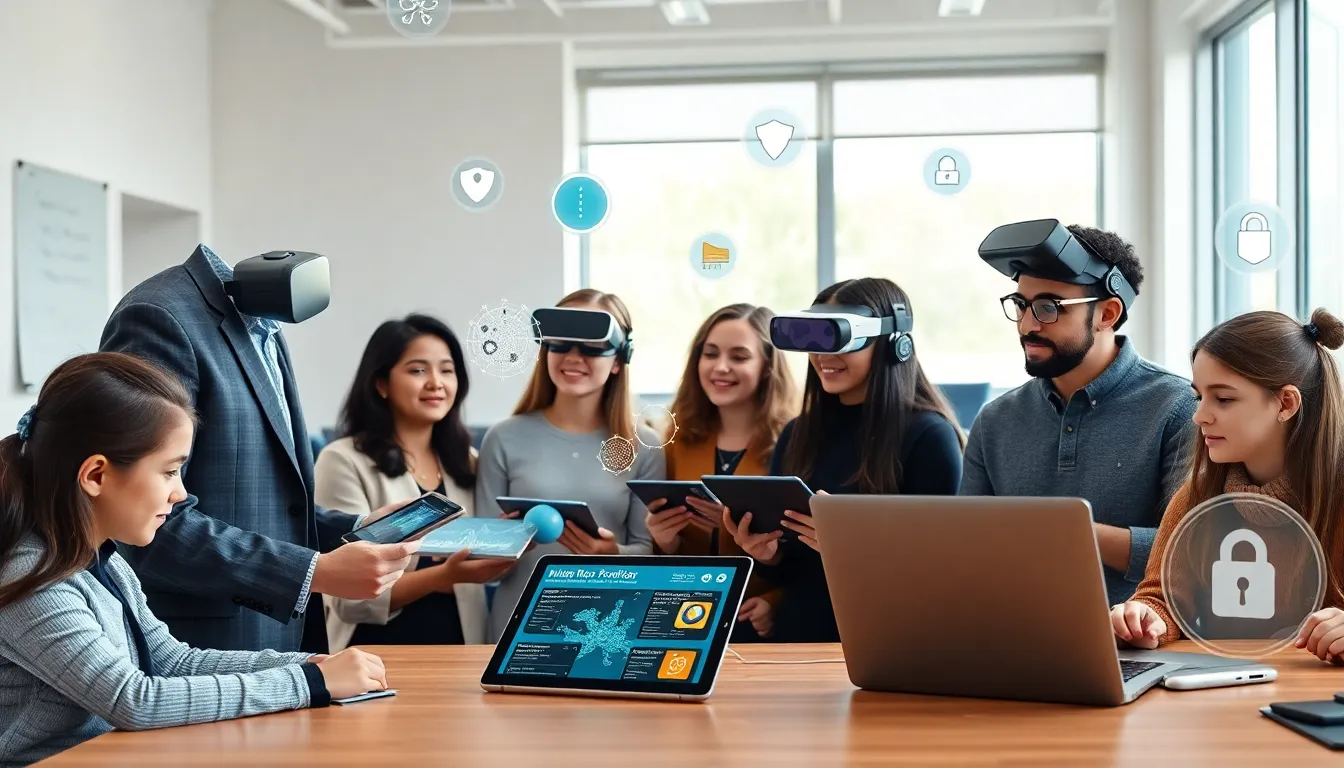
EdTech trends 2026 are shaping how students learn and how educators teach. The education technology sector continues to grow at a rapid pace, with global spending expected to reach $400 billion by 2026. Schools, universities, and corporate training programs are adopting new tools to improve outcomes and engagement.
This year brings significant shifts in how technology supports learning. Artificial intelligence, immersive experiences, and data ethics now sit at the center of educational innovation. Understanding these edtech trends 2026 helps educators, administrators, and learners prepare for what lies ahead.
Table of Contents
ToggleKey Takeaways
- EdTech trends 2026 are driven by AI-powered personalized learning, which adapts content and pacing to each student’s needs in real time.
- Immersive technologies like VR and AR are becoming classroom essentials, with affordable hardware bringing hands-on learning experiences to 15 million students globally.
- Microlearning and skill-based credentials are replacing traditional long-form education, improving retention by up to 80% while fitting into busy schedules.
- Data privacy and ethical AI have become top priorities, with new regulations and fairness audits shaping how edtech companies handle student information.
- Global edtech spending is expected to reach $400 billion by 2026, signaling rapid adoption across K-12, higher education, and corporate training.
AI-Powered Personalized Learning
Artificial intelligence is transforming education by adapting to each student’s needs. AI-powered personalized learning systems analyze student performance in real time. They adjust content difficulty, pacing, and teaching methods based on individual progress.
These systems identify knowledge gaps quickly. A student struggling with algebra receives additional practice problems and explanations. Another student who masters concepts fast moves to advanced material without waiting for the class. This approach keeps learners engaged and reduces frustration.
EdTech trends 2026 show that AI tutors are becoming more sophisticated. Platforms like Carnegie Learning and Khan Academy use machine learning to provide instant feedback. Students get help at 2 AM or during lunch, whenever they need it. Teachers receive detailed reports showing which students need extra support.
The benefits extend beyond K-12 education. Corporate training programs use AI to customize employee development. New hires learn company processes at their own speed. Experienced workers skip familiar content and focus on new skills.
But, AI personalization requires quality data to work well. Schools must invest in proper data infrastructure and teacher training. Educators remain essential, they interpret AI recommendations and provide the human connection students need.
Immersive Technologies in the Classroom
Virtual reality (VR) and augmented reality (AR) are moving from novelty to necessity in education. EdTech trends 2026 indicate that immersive technologies will reach 15 million students globally this year.
VR enables experiences impossible in traditional classrooms. Biology students explore the inside of a human cell. History classes walk through ancient Rome. Medical students practice surgeries without risk to patients. These hands-on experiences improve retention and understanding.
AR overlays digital information onto the physical world. A student points a tablet at a frog skeleton and sees muscles, organs, and circulatory systems appear layer by layer. Architecture students view 3D building models on their desks. Language learners see translations appear above objects in their environment.
The cost of immersive hardware continues to drop. Standalone VR headsets now cost under $300. Schools can purchase classroom sets without breaking budgets. Many AR applications run on standard smartphones and tablets students already own.
EdTech trends 2026 also show increased adoption in special education. VR helps students with autism practice social situations in safe environments. Children with physical disabilities take virtual field trips alongside classmates.
Content creation is expanding too. Teachers can now build simple AR experiences without coding skills. Platforms like CoSpaces and Merge EDU offer drag-and-drop tools for custom lessons.
Microlearning and Skill-Based Education
Long lectures and semester-long courses are giving way to bite-sized learning modules. Microlearning delivers content in segments of 5 to 15 minutes. This format matches how modern learners consume information.
Research shows that microlearning improves retention by up to 80% compared to traditional formats. Short modules fit into busy schedules. A nurse learns a new procedure during a break. A sales rep reviews product updates between client calls.
EdTech trends 2026 highlight the growth of skill-based credentials. Employers increasingly value specific competencies over general degrees. Platforms like Coursera, LinkedIn Learning, and Udemy offer micro-credentials that prove particular abilities.
This shift benefits both learners and organizations. Students pay less and learn faster. Companies get employees with verified, relevant skills. A marketing team member can earn a data analytics badge in weeks rather than pursuing a two-year degree.
Mobile-first design drives microlearning adoption. Apps deliver lessons, quizzes, and practice exercises directly to smartphones. Push notifications remind learners to complete daily modules. Gamification elements like points and streaks maintain motivation.
EdTech trends 2026 show traditional universities adapting to this demand. Many now offer stackable certificates that combine into full degrees. Students build credentials gradually while working full-time.
Data Privacy and Ethical AI in EdTech
As education technology collects more student data, privacy concerns grow. EdTech trends 2026 put data protection and ethical AI at the forefront of policy discussions.
AI systems require extensive data to personalize learning effectively. This includes grades, behavior patterns, attention metrics, and sometimes biometric information. Parents and educators worry about how companies store, use, and share this sensitive data.
New regulations are emerging worldwide. The US has strengthened COPPA (Children’s Online Privacy Protection Act) requirements. The EU’s GDPR continues to influence how edtech companies handle European student data. Several states have passed their own student privacy laws.
Ethical AI concerns extend beyond privacy. Algorithms can perpetuate bias if trained on flawed data. A system might recommend advanced courses less often to students from certain backgrounds. EdTech trends 2026 show increased demand for algorithmic transparency and fairness audits.
Schools are hiring data protection officers and creating AI ethics committees. Vendors must now demonstrate compliance before winning contracts. Many districts require third-party security assessments of edtech platforms.
Teacher and parent education matters too. Stakeholders need to understand what data schools collect and why. Clear communication builds trust and helps families make informed decisions about technology use.